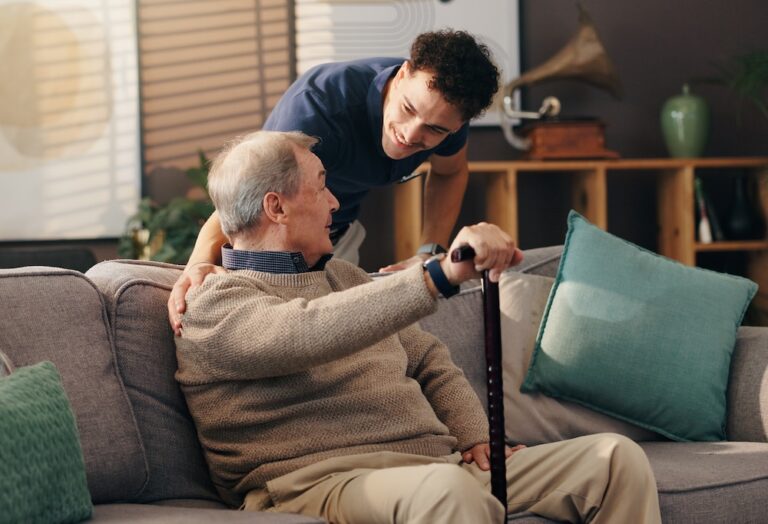


Approach Your Loved One With an Open Heart and Mind
It is hard to watch someone you love struggle with living independently, especially when you know there are practical ways to make their life easier. Many family members spend sleepless nights worrying about whether their loved one is safe and comfortable at home when no one is there to support them.
From your point of view, a conversation about caregiver services makes complete sense. However, your loved one may hear something very different when you bring it up. To them, it may seem like you’re saying that you don’t trust their judgment or capabilities, or that they are suddenly going to lose their decision-making power to someone they don’t know.
Yet your first conversation about caregiving doesn’t need to end with a yes or a no. Before you talk about caregiving with your loved one, it’s better to find out what they are experiencing, how they’re feeling, what fears they have, and whether there are places where they’d be willing to accept help now.
A conversation that ends with understanding is your first goal. Even if your loved one chooses to continue living without support, you will at least have opened the door to a two-way dialogue, not a one-sided decision.
Listen Closely to Why They Are Saying No to Home Caregiver Services
A conversation that pits “I think you need caregiving” against “I don’t think I need caregiving” isn’t the ideal conversation to have with your loved one. In these conversations, you don’t get to know your loved one’s “why.” It is important to know why they’re resistant to the idea.
The Family Caregiver Alliance identifies several concerns that frequently come up when people resist outside assistance, including privacy, independence, cost, and discomfort with allowing someone unfamiliar into the home.
If you ask your loved one why they don’t wish to have a caregiver, and they share that they don’t want someone they don’t know in their home, you can acknowledge their concern and understand their perspective. This inquisitive approach ensures you’ve let your loved one know you want to understand their perspective first, long before any decisions are made.
Try Sharing a Small Concern or Question You Have
It is natural to let worries pile up, so when a conversation between you and your loved one occurs, the impulse is to open the floodgate of concerns. Suddenly, the conversation feels loaded and your loved one’s defenses go up.
But once your loved one has shared their feelings about why they don’t want caregiving services in their home, the door is also open for you to share your “why.” We recommend starting with a single concern.
For example, if you’ve been leaving work on Thursday to drive your loved one to an appointment, discuss that time of day and what would need to be done if you aren’t able to leave work. Beginning with a concrete situation allows you to share a concern while also allowing your loved one to offer their perspective in response. This can open the door to a mutually agreed-upon decision.
You may soon find yourself in a conversation about the value of caregiving services for transportation on a certain day of the week, which might lead to further discussions about how you would go about choosing trustworthy senior home caregiver services.
Share Your Observations, But Not What They Mean
If the door is open to sharing more with your loved one, another effective approach is pointing out what you’ve observed when visiting your loved one’s home.
Here’s an illustration: if you notice that your dad doesn’t have any clean clothes, you might tell him what you noticed and ask whether laundry has been a challenge. That approach is reflected in guidance from the National Institute on Aging, which recommends raising concrete concerns and asking the older adult about them directly. You might find that your loved one thinks doing laundry is tiring and difficult or that they hurt their shoulder lifting clothes into the washer.
It is important when sharing to not make a judgment based on your observations. Noting that there aren’t clean clothes shouldn’t be tied to a statement such as, “You’re unable to keep up with caring for yourself.” Sweeping conclusions don’t leave space for conversation, or give your loved one time to reflect.
See an Opening? Let Your Loved One Shape the Approach to Caregiver Services
Families often think of the conversation as a chance to point out what your loved one needs help with. Yet there is a more useful question you can try: ask what they most want to keep doing for themselves?
That answer gives you information about how you can help. Your loved one may care deeply about making their own breakfast every morning but not care whether they get help with laundry; they may welcome transportation while wanting the rest of their routine left alone; or they may feel comfortable with companionship in the afternoon but feel strongly about maintaining privacy during personal care routines.
The Administration for Community Living describes care planning as a process directed by the person receiving assistance, with their goals and preferences centered. Families considering senior home care services can bring the same principle into their own discussions.
When you talk about caregiver services, keep the discussion tied to the part of life your loved one does want help with. Care can address one part of their day that has become difficult while leaving the rest of the person’s routine largely unchanged. A conversation between you and your loved one becomes much more respectful when it begins with the life your loved one wants to continue living, and then considers where assistance might fit.
You don’t need to design an entire long-term care arrangement. If your loved one agrees to getting help with transportation, start there. Your loved one’s willingness to accept help in one area should be viewed as progress.
Bring a Physician Into the Conversation for Medical Concerns
There are good reasons to involve a physician when you have noticed a change in your loved one’s health, mobility, medication use, memory, emotions, or thinking.
Asking whether your loved one would be willing to talk with the doctor about a challenge they are having keeps the focus on the concern itself. Your loved one may be more likely to open up and be receptive to a conversation with their doctor about senior caregiver services.
Yet we think you should avoid this common mistake: never use the physician as someone who can settle an argument about home caregiver services. Saying, “Your doctor agrees with us,” puts the doctor in the middle of a family dispute and may decrease the trust your loved one has in them and you.
Remember: Home Caregiver Services Can Adapt to Your Loved One’s Current Needs
Caregiver services don’t have to begin as an all-or-nothing arrangement. Private duty care can help with a single need, such as transportation, laundry, or companionship for a block of hours each week. If that works well, you can maintain that level of support. If your loved one’s needs change, their care plan can change, too.
Offering this flexibility during your conversation lets your loved one start with the amount of help that feels comfortable today, allowing them to see that you’ve heard their needs and are only adding in care that they feel ready to accept now.
Always Keep the Door Open With Love and Respect
You might find yourself finishing up a conversation and feeling like you haven’t gotten anywhere at all. Your loved one may insist that they want to do everything for themselves. But an open conversation can still leave both of you in a better place than where you started.
You now may know why your loved one doesn’t want a caregiver in their home. You may learn that they don’t mind getting help with a certain task. These bits of information are critical, as they allow you to keep the conversation going, and that’s what’s most important. You want nothing more than your loved one’s safety, well-being, and comfort. Finding a solution that meets their needs just may take a little more patience than you planned, but at least care is now a part of the discussion.